


Tiny Ride
3.411.00 Reviews
App Specs
- Version
- 1.0.3
- Updated On
- License
- Free
- Downloads
- 10,000+
- Developer
- Playfo
- Categories
- Racing
- Platform
- Android
Screenshots
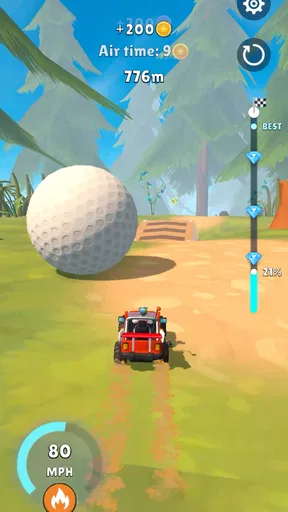
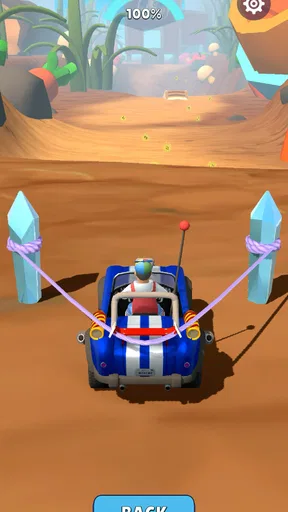
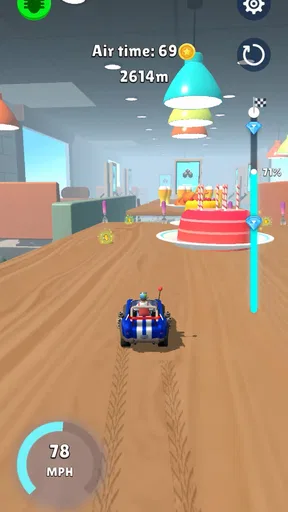
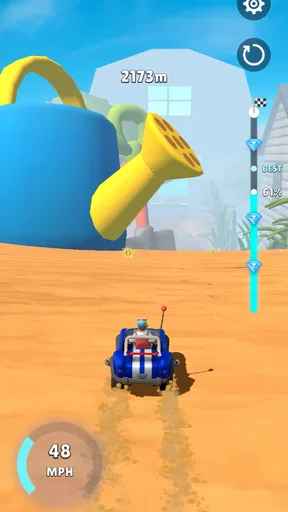
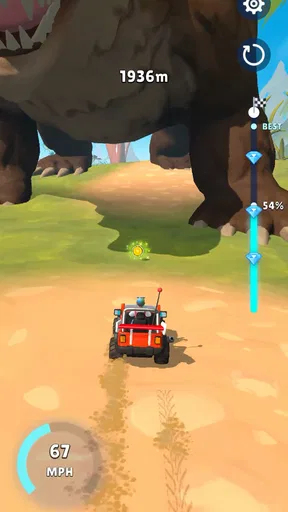
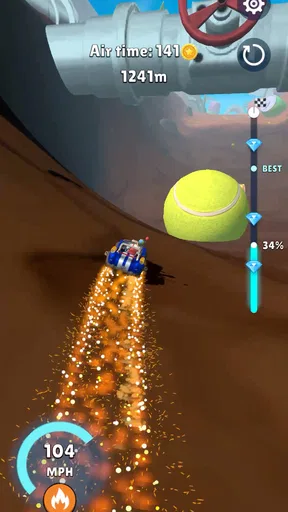
 Analysis by AppCompare
Tiny Ride is the kind of racing game I would open when I want a quick, uncomplicated mobile drive rather than a large simulation with a long learning curve. Its idea is easy to understand: guide a small car through a miniature adventure and see how far your control, timing, and patience can take you. That compact scale gives it a friendly personality, but it also means the game needs to be judged on how satisfying its moment-to-moment driving feels, not on the size of its feature list.
My overall impression is cautiously positive. The game has a clear identity, it is free to download, and its Teen content rating makes it more suitable for older children and adults than for very young players. At the same time, I would not approach it expecting the depth of a major console-style racer or the broad competitive systems found in established mobile racing games. Tiny Ride works best as a focused, lightweight option for short sessions.
What the small-car format gets right
The most appealing part of Tiny Ride is its sense of scale. A tiny vehicle naturally makes ordinary obstacles feel more important, and that can turn simple movement into a surprisingly attentive experience. Instead of relying on the fantasy of driving an expensive supercar, the game’s charm comes from making a small ride feel like the center of a larger world. That gives the adventure a playful tone without needing a complicated premise.
I also like that the concept is immediately readable. Someone can pick it up without first studying a long story or learning a large collection of controls. That makes it a reasonable choice for a short break, a commute, or a few minutes at the end of the day. The compact presentation is not automatically a weakness; for the right player, it is the reason to try it.
Still, simple does not mean effortless. Small-scale racing usually depends on careful steering and good reactions, and a game built around that idea can become demanding when the route requires repeated corrections. I found that the most useful mindset is to treat each attempt as practice rather than rushing toward a perfect run. Tiny Ride is more enjoyable when I focus on learning how the car responds instead of expecting immediate mastery.
The developer is Playfo, and the current release is version 1.0.3. That places the game in an early stage from a player’s perspective, so I would keep expectations sensible. A newer or smaller racing title may feel more focused than a long-running alternative, but it may also have less refinement and fewer layers for returning players. The right question is not whether it replaces every other racer, but whether its compact driving idea matches what I want from a mobile game.
How I would use it in an ordinary day
Imagine having ten minutes before an appointment. I would not choose Tiny Ride if I wanted a substantial championship, a long story chapter, or a detailed tuning session. I would choose it if I wanted to make a few attempts, concentrate on a route, and put the phone away without feeling committed to a lengthy play session.
Worth Reading Before You Choose

Baby Panda World Brings Quick Play to Modern Phones, but Its Game Library Feels Busy

ESPN’s Live Game View Makes Following Close Games Easier

QuizzLand Review: A Good Fit for Short Trivia Breaks, Not Every Player

Basketball Stars: Multiplayer Is Fast, but Can It Recover When Matches Go Wrong?

WEBTOON Turns Phone Updates Into a Better Reading Routine

Link to Windows Runs on Shared Habits, Not Social Feeds
That short-session role is important. Many mobile racing games push the player toward daily routines, unlock schedules, or repeated events. Tiny Ride’s miniature adventure framing feels better suited to a direct pick-up-and-play habit. I can see it working for someone who enjoys testing personal control in brief bursts, especially when a larger racing game feels too demanding for the moment.
There is also a useful mental adjustment for new players: do not judge the car by the first few seconds alone. A small vehicle can feel twitchy when I overcorrect, particularly if I treat every turn like an emergency. Gentle inputs and looking ahead are more valuable than constant movement. I would begin by making deliberately modest steering changes, then increase them only when the route clearly calls for it.
That approach is one of the game’s less obvious trade-offs. A player who wants immediate, dramatic speed may find the experience restrained. A player who enjoys precision can find more interest in the same restraint. Tiny Ride is therefore less about the fantasy of unstoppable acceleration and more about whether small adjustments feel rewarding.
Progress without turning every session into pressure
When I review a free mobile game, I pay close attention to whether progress feels like a natural reward or a reason to keep spending. Tiny Ride is free, which removes the initial barrier to trying it, but free access alone does not tell me whether later play is relaxed, demanding, or shaped by purchase pressure. I would approach the game with that distinction in mind rather than assuming that free means generous or that it automatically means aggressive monetization.
The practical advice is simple: play long enough to understand the basic rhythm before deciding whether it deserves regular space on your phone. If the driving itself is enjoyable, short attempts can remain worthwhile even when progress is gradual. If the main attraction depends on constantly chasing the next unlock or overcoming repeated friction, the game may lose its appeal quickly for players who prefer a calm racing experience.
I would also avoid spending impulsively during the first session. A player should first decide whether the handling, pace, and miniature adventure style are genuinely enjoyable. There is no reason to pay for something that does not improve the part of the game you actually like. For me, the key test is whether I would still want to make another attempt after a disappointing run, without needing a reward prompt to motivate me.
Because the game is listed as free, it is accessible to curious players who want to test that question for themselves. However, I would still recommend checking any purchase screen carefully before confirming a transaction, especially if a child or another family member uses the device. That is not a criticism unique to Tiny Ride; it is sensible behavior for any free mobile game where the initial download costs nothing.
Fairness matters more than a tiny car
A racing game feels fair when success comes mainly from understanding the route and improving control. For Tiny Ride, that standard matters even more because the concept is so compact. If the car responds consistently, mistakes feel useful: I can identify what went wrong and try again. If outcomes feel unpredictable, the small-scale design loses some of its appeal because precision no longer feels connected to progress.
I would therefore judge competitive fairness through the driving experience rather than through presentation. A fair attempt should reward patience, anticipation, and controlled movement. A rushed attempt should fail for understandable reasons. That creates a healthy loop in which each retry teaches me something instead of merely asking me to repeat the same action.
This is also where Tiny Ride may differ from the usual alternatives. Large mobile racers often emphasize vehicle collections, visual upgrades, online competition, or licensed cars. Those features can provide variety, but they can also shift attention away from the actual driving. Tiny Ride’s smaller concept is potentially stronger for players who want the route and the car to remain the focus.
On the other hand, anyone who enjoys comparing lap times with a large community, building a garage, or competing through extensive ranked systems may find a conventional racing game more satisfying. Those games usually offer a clearer long-term structure for competitive players. Tiny Ride is better considered a focused personal challenge unless its own systems provide enough variety to keep that challenge fresh.
One useful habit is to separate a bad result into two possibilities: a control mistake or a design frustration. If I entered a turn too quickly, that is something I can improve. If the game gives me unclear feedback or makes the car behave inconsistently, that is a limitation of the experience rather than a failure of my technique. Keeping that distinction clear prevents unnecessary frustration and helps me decide fairly whether the game suits me.
Who should try it, and who should skip it?
I would recommend Tiny Ride to players who like approachable racing ideas, miniature worlds, and short attempts that can be repeated without a large commitment. It may also suit someone looking for a free game to test casually before deciding whether to keep it installed. The Teen age rating should be taken seriously by families, so parents should make their own judgment about whether the tone and content are appropriate for a younger player.
I would be less likely to recommend it to someone seeking a realistic driving simulator. The tiny-car premise suggests a playful adventure rather than a detailed recreation of real motorsport, and those are very different expectations. I would also point established racing fans toward a larger alternative if they specifically want extensive car customization, a deep career mode, or a busy online scene.
Another group that may want to skip it is anyone who dislikes retry-based play. A compact racing challenge often depends on repeating sections until movement becomes familiar. That can be satisfying for a patient player, but it can feel repetitive to someone who wants constant new scenery and immediate rewards. Knowing that preference in advance is more useful than assuming every racing game should provide the same kind of excitement.
For a child using a shared device, I would combine the Teen rating with active supervision and a quick look at the game’s on-screen purchase flow. The fact that the game is free makes trying it easier, but it does not remove the need for sensible device controls. That small precaution is worthwhile whenever a game may be played without the account holder watching every session.
What to check before making it a regular game
My first check would be control comfort. I would play several short attempts using the same grip and screen orientation, because a control scheme that feels fine for one minute may become tiring after repeated corrections. If the car requires delicate movement, keeping the phone steady can matter as much as reacting quickly. I would also avoid playing while distracted; precision racing is a poor match for multitasking.
My second check would be progress pressure. I would notice whether I am retrying because I want to improve or because the game is pushing me toward the next reward. That difference tells me whether Tiny Ride is becoming a pleasant skill game or an obligation. If I feel relaxed after a failed attempt and understand what to try next, that is a good sign. If I feel that failure is only a delay before another prompt, I would reduce my play time.
My third check would be variety over several sessions. A miniature adventure can be charming at first, but charm alone may not sustain long-term play. I would ask myself whether the driving remains interesting after the first novelty fades. This is a practical test for any small racing title: the core handling must carry the experience when there is no new surprise to discover.
Finally, I would keep the game’s maturity label in view. Tiny Ride is marked Teen, so I would not describe it as a universal family racer. That does not tell me exactly how every player will react to it, but it is a clear reason to make an age-appropriate choice rather than handing it to a young child automatically.
My trust verdict after weighing the trade-offs
Tiny Ride earns consideration because it has a distinct, easy-to-understand identity. The small-car adventure idea is more memorable than a generic promise of speed, and the free entry point lets interested players test the driving without committing money first. The game is most convincing when treated as a compact skill-focused racer, not as a replacement for a full-scale racing platform.
The average rating is 3.4 from around twenty ratings, with around ten written reviews, so the public response is still limited and should not be treated as a settled verdict. The game has passed ten thousand installs, which shows that people are finding it, but that audience size is still modest compared with major racing names. I would use those figures as context, not as a substitute for trying the game myself.
My recommendation is therefore measured: try it if you want a free, miniature racing adventure and enjoy improving through repeated attempts. Keep your expectations modest about depth, competition, and long-term progression. If your priority is a broad garage, realistic driving, or a large multiplayer community, choose a more established racer instead.
The fairest way to approach Tiny Ride is to judge the quality of its driving before judging its promise as a long-term game. If the tiny car makes you want to retry because you can see your own improvement, it has a worthwhile place in a casual racing collection. If you need constant unlocks, extensive competition, or a detailed simulation, its focused design will probably feel too limited.
Pros
- Simple controls make the game easy to pick up and play.
- Short races are ideal for quick gaming sessions.
- Bright visuals give the tiny vehicles plenty of personality.
- The compact tracks encourage repeated attempts to improve times.
- Runs smoothly on most modern Android and iOS devices.
Cons
- Progress may feel repetitive once the available tracks are mastered.
- Small screens can make obstacles and turns harder to judge.
- Some vehicles or upgrades may require extended play to unlock.
- The game may offer limited depth for players seeking a racing simulator.
- Ads can interrupt the experience depending on the version and settings.
FAQs for Tiny Ride
What is Tiny Ride and how does the game work?
Tiny Ride is a casual driving game focused on short, entertaining sessions with compact vehicles and bite-sized challenges. After installing it, players can usually expect simple touch controls, quick races or driving tasks, and a progression system based on completing objectives. Its lightweight concept makes it suitable for players who want an easy game to pick up without learning complicated mechanics.
Is Tiny Ride free to download and play?
Tiny Ride can generally be downloaded at no initial cost, although the exact business model may vary depending on the Android or iOS version. Free games of this type may include optional purchases, advertising, or unlockable content. Before downloading, check the store listing for details about in-app purchases, subscription terms, supported devices, and whether any features require payment.
Does Tiny Ride require an internet connection?
Tiny Ride may allow some driving or progression features to work offline, which is useful when you are travelling or have limited mobile data. However, advertisements, cloud saving, updates, leaderboards, rewards, or other online services may require an active connection. It is best to launch the game once while connected and review which features remain available after switching to offline mode.
Is Tiny Ride suitable for children and casual players?
Tiny Ride is designed around accessible gameplay, so it may be a good choice for casual players who prefer straightforward controls and short sessions. Parents should still review the age rating, advertising policy, and in-app purchase settings before allowing children to play. Store descriptions can also clarify whether the game collects data or includes social, chat, or external-link features.
What devices are compatible with Tiny Ride, and how much storage does it need?
Compatibility depends on the specific release and the operating system version installed on your device. Before downloading Tiny Ride, check its Google Play or App Store page for supported Android or iOS versions, required permissions, and the listed download size. Keeping additional free storage is recommended because updates and temporary files may require more space than the initial installation.


